


Why is recruiting more difficult today than it used to be?
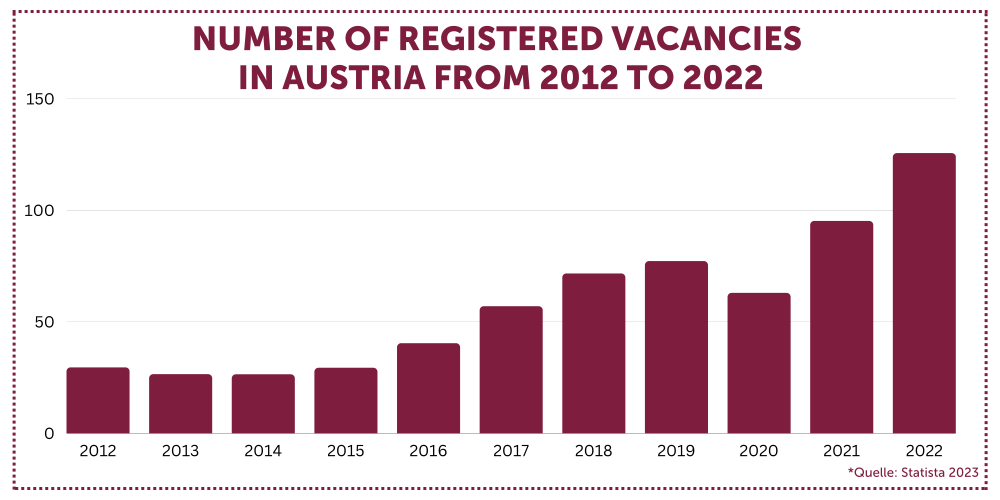
Recruiting has changed significantly over the past decade. Companies are facing new challenges when trying to attract qualified professionals. . One of the reasons is the lack of qualified applicants in certain sectors and regions. On the other hand, there is of course a shortage of skilled workers - never before have there been so many jobs to be filled in Austria as in 2023.
Several factors contribute to this:
- the shortage of skilled workers in many industries
- higher expectations from candidates regarding salary, flexibility and benefits
- greater transparency in the job market through platforms such as LinkedIn and Glassdoor
- the increasing use of digital recruiting channels and social media
In addition, applicants have higher expectations nowadays and it is more difficult to satisfy them and win them over. Technological developments - such as the increasing use of online recruiting tools and social media - have contributed to potential candidates finding other career opportunities faster and easier, which makes recruiting even more difficult for companies. In order not to be left behind the competition as a potential employer, the application process should therefore be as flawless as possible. Candidates today can easily compare multiple job opportunities and employers. As a result, companies must ensure that their hiring process is efficient, transparent and candidate-friendly.
10 mistakes to avoid in the recruiting process
1. Unclear job descriptions
A common mistake in the recruiting process is an unclear job description. This can lead to unsuitable people applying, which wastes time and resources - on both sides! A study by the Trendence Institute from 2021 also shows that many potential applicants drop out if the job description is unclear and unclear. To avoid this, make sure your job advertisement is clear and concise and includes all the important requirements and tasks.
Schulmeister Recruiting Tip:
A strong job description should clearly outline:
- responsibilities and tasks
- required qualifications
- career development opportunities
- salary range
- benefits and working conditions
2. Focus on formal qualifications
Many companies place too much emphasis on formal education or years of experience when evaluating candidates. If you focus only on formal qualifications such as education and experience when selecting candidates, you risk missing out on talented candidates. Even without traditional qualifications, a candidate could be a valuable addition to your team. So consider soft factors such as personality and the ability to work as part of a team.
Companies that consider both hard skills and soft skills often find stronger and more motivated employees.
3. Inadequate selection process
Another common problem in recruiting employees is practicing an inappropriate selection process. An example of this would be conducting lengthy interviews where candidates have to answer many questions that have nothing to do with their actual work. This can be frustrating for candidates and reduce their interest in the job. So make sure that the selection process is relevant, fair and really related to the tasks and requirements of the job.
Multiple interview rounds, unnecessary tests or slow decision-making can frustrate applicants — especially in competitive labor markets.
An effective recruitment process should be:
- structured
- efficient
- transparent
- focused on relevant competencies
4. Inadequate preparation for interviews
Without adequate preparation, it is difficult to identify the best candidates and interviews become less informative for both sides. To counteract this, employers should find out about the candidate in advance and have relevant questions ready. Thorough research before the interview, such as reviewing CVs, work samples, references and the candidate's online presence, can also help to ask better interview questions and gain a deeper understanding of the other person's experience and skills.
Before conducting interviews, hiring managers should:
- carefully review the candidate’s CV
- prepare structured interview questions
- understand the candidate’s professional background
This leads to more meaningful conversations and better hiring decisions.
5. Poor communication with candidates
Communication plays a critical role in creating a positive candidate experience: Poor communication with candidates can make them feel unappreciated and quickly lose interest. It is therefore important to communicate in a timely and transparent manner and to keep each individual informed of the status of their application. This includes confirmation that the application has been received as well as brief feedback on whether or not the candidate will be considered further.
To improve communication, companies should:
- confirm receipt of the application
- clearly explain the next steps in the process
- provide timely updates and feedback
Transparent communication strengthens the company’s employer brand and increases candidate engagement.
6. Unclear expectations about the role
Unclear expectations on both the company and the candidate side can lead to misunderstandings and disappointment. For example, the candidate may assume that the job involves more responsibility than is actually the case, or the new employee may be expected to perform certain tasks that were not mentioned in the original job description.
To prevent this, companies should clearly define:
- key responsibilities
- performance expectations
- reporting structures
- career development opportunities
A well-defined job description helps align expectations on both sides.
So you should make sure that you have clear expectations about the position and its objectives, and that these expectations are clearly communicated to the candidate during the recruitment process. One way to do this is by creating a detailed job description - see point 1.
7. Lack of diversity in recruiting
Diversity and inclusion are increasingly important in modern organizations. Companies that unintentionally favor certain backgrounds or demographics may miss out on valuable talent. A lack of diversity means that companies often (unconsciously) favour one ethnicity, gender, age group or cultural background and ignore other perspectives. This can lead to missing out on the best talent and the overall company culture being hampered by a lack of diversity and inclusion. To avoid this, make sure you proactively seek out diverse talent and work to break down barriers for underrepresented groups.
Some steps employers can take to promote diversity and inclusion in the recruitment process include:
- using more inclusive language and images in job advertisements
- training recruiters and interviewers to recognise and overcome unconscious biases
- the creation of career development and support programmes for underrepresented groups.
8. Offering uncompetitive salaries
Compensation remains one of the most important factors when candidates evaluate job opportunities. If a company offers salaries below market level, qualified candidates may decline the offer or leave shortly after joining.
Companies should therefore regularly analyze:
- market salary benchmarks
- industry trends
- candidate expectations
Competitive compensation increases the chances of attracting and retaining top talent.
9. Lack of onboarding programmes
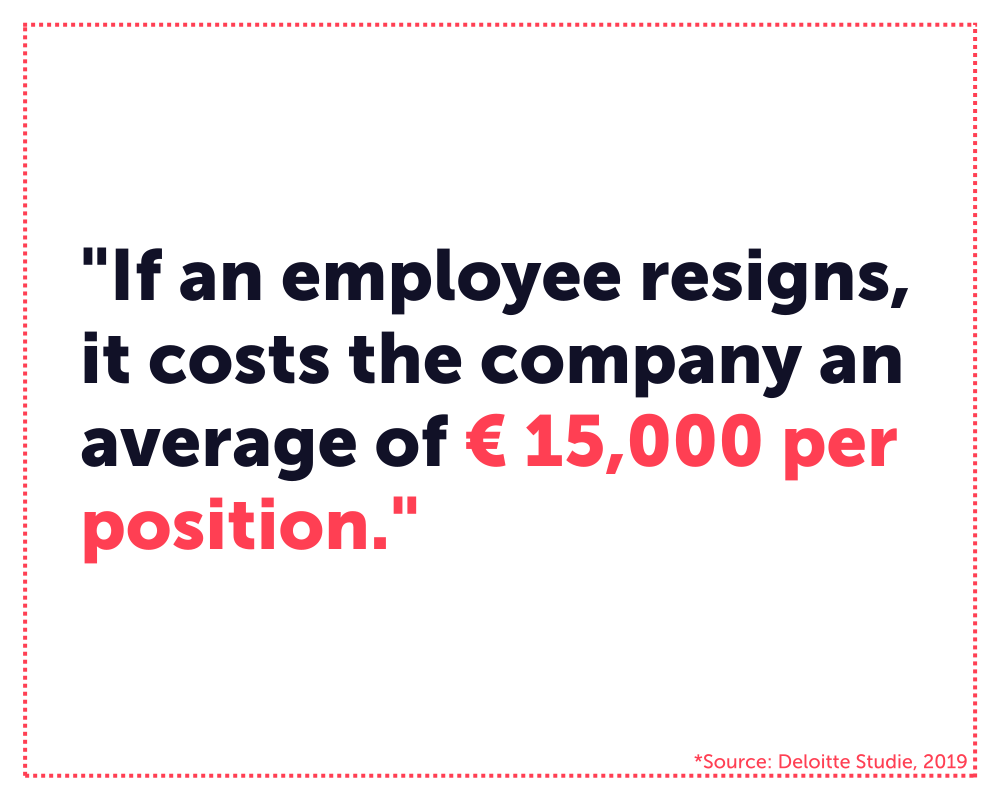
Recruiting does not end when a candidate signs the contract. A well-designed onboarding process is essential to ensure that new employees are integrated quickly and successfully. Otherwise, problems such as lack of productivity, higher error rates or even early departures will creep in.
A successful onboarding process should include:
- structured training and orientation
- clear responsibilities and expectations
- mentoring or support from colleagues
- regular feedback during the first months
Effective onboarding significantly improves employee retention.
10. Too few and unattractive benefits
Fringe Benefits have become an important factor in attracting talent. The importance of benefits in job advertisements cannot be underestimated as they play an important role in attracting qualified employees. An attractive benefits package can help to attract applicants and motivate them to take a closer look at the job.
Some of the most common benefits offered are:
- Flexible working hours
- Work-life balance
- Opportunities for training and career development
- Bonus payments
- Employee events
- Find out more about benefits that really have an impact in our blogarticle.
It is important to make sure that the benefits also meet the expectations of the applicants. If numerous benefits are promised in the advertisement, but then not delivered, this will lead to bad moods among the new employees - so keep your word!
Our conclusion: See employees as the most important resource
Employees are the most important asset of any organization. Hiring the right people and creating a positive candidate experience are therefore essential for long-term business success.
Companies that focus on transparent communication, efficient hiring processes and competitive working conditions are much more likely to attract and retain the best talent.

FAQ: Common questions about recruiting mistakes
What are the most common recruiting mistakes companies make?
Common recruiting mistakes include unclear job descriptions, slow hiring processes, poor communication with candidates, unrealistic requirements and uncompetitive salaries. These issues can lead to losing qualified candidates during the hiring process.
Why is an efficient hiring process important?
An efficient hiring process helps companies secure top talent before competitors do. Long and complicated recruitment processes often result in candidates accepting other job offers.
How can companies improve their recruiting process?
Companies can improve recruiting by:
- writing clear job descriptions
- shortening hiring timelines
- communicating transparently with candidates
- offering competitive salaries and benefits
- implementing structured onboarding programs
Ein professioneller Recruiting-Prozess verbessert außerdem die Arbeitgebermarke.
How does candidate experience affect recruiting success?
Candidate experience plays a crucial role in attracting talent. A positive experience improves employer reputation and increases the likelihood that candidates accept job offers or recommend the company to others.
Why do candidates drop out of hiring processes?
Candidates often withdraw from hiring processes due to slow communication, unclear job expectations, too many interview rounds or uncompetitive salary offers. Find out more about the Schulmeister recruiting process!